

High-end retail tech integration: How phygital experiences transform customer engagement
At the forefront of retail, one insight is widely shared: the traditional shop floor has definitively lost its monopoly. For professionals aiming to make an impact, such as instore designers and marketing managers, this creates a complex tension. The modern consumer is, on one hand, ‘digitally fatigued’, yet on the other, expects a seamless experience.
The biggest frustration is the so-called ‘gimmick’. Technology is often added for its own sake, resulting in visual clutter and a disrupted customer journey.
In this blog, we explore how high-end retail tech integration and phygital experiences can overcome this challenge, transforming static spaces into living brand experiences, where interaction, sensory branding and intelligent technology foster emotional loyalty and enhance perceived value.
How interaction drives brand engagement
When approached as a strategic discipline rather than an IT issue, high-end retail tech integration addresses fundamental pain points. By leveraging phygital experiences and sensory branding, the physical store evolves from a static environment into a vibrant, immersive brand experience.
A key challenge for modern marketing managers is breaking the ‘passive barrier’. In traditional retail settings, customers are primarily observers. In high-quality phygital experiences, they become participants.
Every action that triggers a digital response activates a psychological sense of ownership. Research shows that interaction and touch have an effect on the brain similar to actual possession. Consequently, customers unconsciously assign higher value to the object.
The outcome is a shift in perceived value. The object transforms from a mere product into a meaningful part of the customer’s personal world. This is the point where brand perception evolves into emotional loyalty. Technology facilitates the transition from casual browsing to an implicit sense of ownership long before the transaction at the checkout takes place.

Sensory branding: Integrating technology seamlessly
For high-end designers, the greatest challenge lies in maintaining visual identity while introducing advanced technology. Hardware should never disrupt the carefully curated aesthetic of the store.
This is where sensory branding comes into play. Technology becomes not a standalone feature, but an integrated, intelligent layer that brings the space to life.
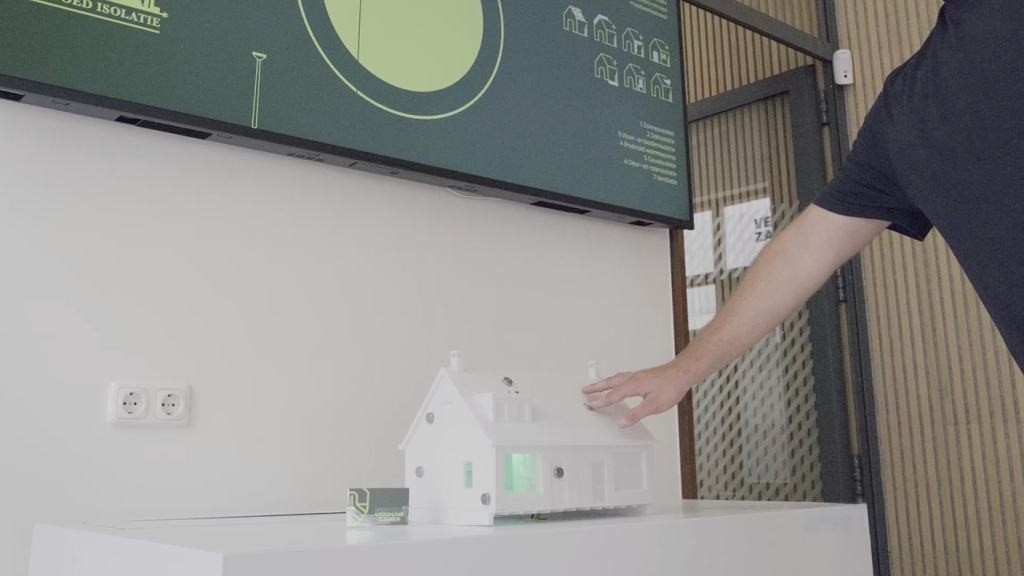
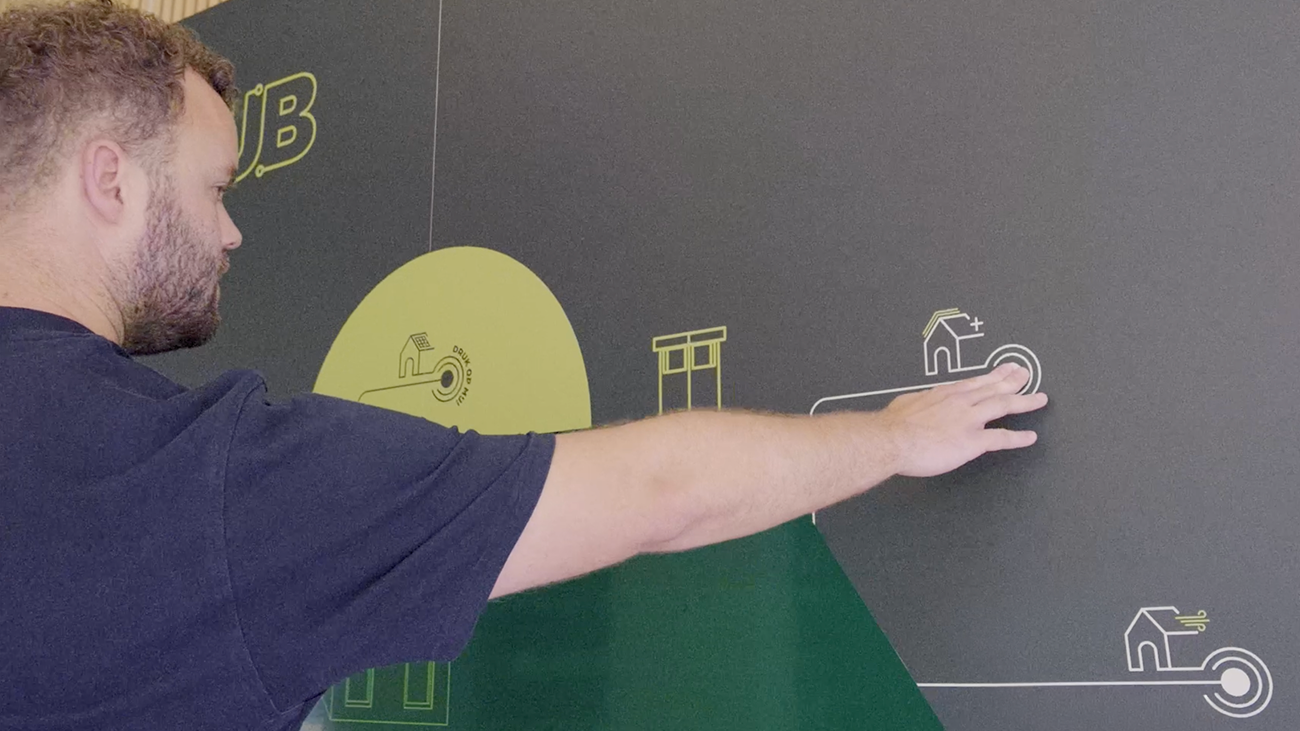
Think of audio zones that create immersive soundscapes without visible speakers, or surfaces that respond to a visitor’s presence through sensors. This form of high-end retail tech creates emotional engagement without compromising visual harmony. It satisfies the demand for innovation while fully embedding technology within the store’s atmosphere.
Reducing perceived waiting time: The law of elastic time
Waiting is one of the most critical pain points in the customer journey. Time is relative. Five minutes in a fitting room can feel like an hour, while five minutes immersed in an engaging experience can fly by.
By placing interactive installations at so-called ‘dead moments’, waiting becomes discovery. An interactive mirror, for example, can show not only fit but also the origin of the material, keeping the brain in an active ‘flow state’. The customer is no longer passively waiting, they are exploring. The final touchpoint with the brand becomes one of wonder.
Conclusion: Smarter integration as a strategic imperative
For professionals ahead of the curve, the strategy is clear. Differentiation is not achieved by more technology, but by smarter integration.
High-end retail tech is not a one-off addition. It is a strategic investment in the relationship with your audience. When the physical space responds to the visitor:
- dwell time increases
- brand perception is strengthened
- conversions arise from genuine connection
The result is a retail experience that delivers both aesthetic and emotional impact.